The God Who Fathers - Part 1
Ministries > Unlimited Grace with Bryan Chapell
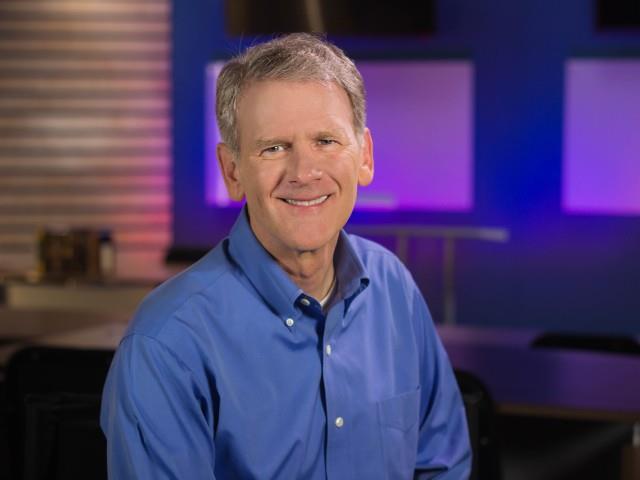
Pastor Bryan shares a lesson from Psalm 78. Dr. Chapell shares how our Father in Heaven can take the flaws in our lives, and make something beautiful
Bryan Chapell: There may be a few naughty things. In who we are and what we have done. But it is not the reason to give up on God in your family or in your life, because what the artist in heaven can do is take what is injured and flawed and dark and make it beautiful for His very purposes.
Guest (Male): So glad you joined us for today's Unlimited Grace, the audio broadcast ministry of pastor and author Bryan Chapell. In today's episode, Pastor Bryan shares a lesson from Psalm 78. Dr. Chapell shares how our Father in heaven can take the flaws in our lives and make them something beautiful. You can find this lesson and many others when you visit unlimitedgrace.com. And while you're there, look for Pastor Bryan's book, The Promises of Grace. Dr. Chapell offers a careful look at the beauty of grace and all it brings to believers. These blessings come with the understanding that because we cannot hang on to God, He hangs on to us. Let's hear now from Dr. Bryan Chapell as he shares the lesson, The God Who Fathers.
Bryan Chapell: For all the years of her growing up, Cathy's family had a very large majestic tree in their front yard. But just weeks before Cathy's father died, it became apparent that the tree had died. And so one of the last active efforts of Cathy's father was to get that tree taken down and properly disposed of. In the life of that tree, there had been various times that insects or injury had attacked it, and as a consequence, some of you know what happens to oak trees, a burl formed over the over the injury. As the wood starts to layer, to cover the injury and to heal it, you know what happens? There's there's kind of a bump that forms on the tree. And inside that bump, as the wood is layering, the wood is denser and thicker and tougher and harder and darker. And yet if a woodworker knows what to do with a burl, you can take that injury and that injured part of the tree can be turned into a peculiar beauty. With those whose art is to take it and make it into a special household implement like a bowl who when it is turned on a lathe by someone with an expert hand, begins to show the beauty of the injury as it is used in the hands of someone who is expert. I think of that in terms of this particular psalm that has some difficult portions, none more difficult than verse two. Where the psalmist says, I will open my mouth in a parable, I will utter dark sayings from of old. That word dark is actually a Hebrew word for naughty. Like the knots of a tree. Something that's wrong, something that isn't smooth, something that isn't already just perfect. And yet in the hands of God is made beautiful. The thing that is being described in the psalm is the efforts of a father. But those efforts are described with dark sayings from of old. As though God is reminding us that while there is the calling of a father to be a father, it is not a calling to perfection. In fact, some of what God is calling us to at the same moment that He is calling us to our responsibilities as father is to acknowledge there may be a few naughty things. In who we are and what we have done. But it is not the reason to give up on God in your family or in your life, because what the artist in heaven can do is take what is injured and flawed and dark and make it beautiful for His very purposes. How does God do that? He does it surely at first just by reminding us what a father's duty is. It's it's not really surprising to us. We are to recount to the children of faith the deeds of the Lord. What what He has done. Verse two and three are making it clear. I will open my mouth in a parable. I will utter dark sayings from of old, things we've heard and known that our fathers have told us, will not hide them from our children, but tell the coming generation the glorious deeds of the Lord. Two things have come together. We will not hide the dark sayings, nor fail to tell the glorious deeds of the Lord. This is a long psalm, so we didn't have all of it read in front of us, but verse 12 is beginning to talk about the glorious things of the Lord. What has God done that children should know? This generation said, in the sight of their fathers, God performed wonders in the land of Egypt, in the fields of Zoan. He divided the sea and let the children pass through it and made waters stand like a heap. In the daytime, He led them with a cloud and all the night with a fiery light. He split the rocks in the wilderness and gave them drink abundantly from the deep. He made streams come out of the rock and cause waters to flow down like rivers. He's recounting the history of Israel, and he says, Here are the amazing things God did. Here's how God delivered His people. Here's what God did to redeem and to save us. These are the mighty glorious deeds of God. But what about the dark sayings? What about the naughty, hard, dark things in us? That's verse nine. The Ephraimites, which is another name for Israel. Armed with a bow, turned back on the day of battle. They did not keep God's covenants, but refused to walk according to His law. They forgot His works and the wonders that He had shown them. They turned and ran. Though God had provided for them, they didn't, they didn't stand in the time when challenge came. And not only did they not stand for challenge because they didn't want to talk about their failings. They forgot God. And as a consequence, they did not tell their children the praiseworthy deeds of the Lord and the wonders that He had done. It is the psalmist speaking of the great dread that we as Christian parents have and we as a parenting church have, that by failing to speak of the glories of God, our own children would forget. That as much as we press them to get good grades and take them to their music lessons and encourage them to go to Grandma's house on holidays. We we do all the things that are pushed in the right direction, but by failing to mention the things that they most need to hear of the faith, they forget. The reason it's so important to go to this Psalm, as you have to say, what are they supposed to be remembering? Not just the glorious deeds of God. Remember the Psalmist said, I will not hide the dark sayings. The flaws, the things I didn't do right, the things that I haven't matched up on and nonetheless God was working in behalf of His people. It's it's the wonderful message of grace. We know our flaws. We know the injuries. We know the dark in us. And yet God was providing all along, even until this moment that the psalm is written. We have dark things we don't want to talk about, and yet our God was glorious. And it's those two things together. Not not just the glorious deeds of God, but right in the same breath, right in the same account, and this is why we needed the glorious deeds of God. Not our perfections, not what we had made right. We we ran, we we went away from the challenge. We weren't consistent. And yet the glorious God was providing for us a path of redemption. Not not so long ago, in this church, there was a man who decided he needed to get on a plane. And he went and spent some time with an adult son. And said to him this, I apologize to you. When you were growing up, I made clear our expectations. I certainly made clear our frustrations. But I have only recently begun to understand myself the depth and the wonder of the grace of God. And I did not make that plain to you. Please forgive me. Two things. The son said, I forgive you. And father and son are talking again for the first time in years. The conversation's open. It's begun. As the dark sayings are not being withheld. The naughty points, the the flaws in me. Because there is beauty in the injury. When we as God's fathers, a church, a people, individual fathers are able to say, I I want to show you by example, but I know my example is not perfect, but my God is greater than my flaws. And I need you to know that. It is what I do not want you to forget. Forget my example. Forget my expectations, but do not forget my God. Who in the midst of the dark things that you know about me, has been gracious to me. I I think about the influence of that as we look at verse four, I will tell the next generation. The duty is not just to recount the past. It's always to prepare for the future. I will tell. I will prepare the next generation. Our fathers told us of the grace of God, and we will tell the next generation. As that baton is passed, it is the faithfulness of a church, not just to talk about expectations and behavior, but to talk about the grace of God. And there's no better time to mention that than Vacation Bible School, where some of you went through the torture of caring for ill-behaved children this week. And you know it's not just the children who come. Sometimes it's our own children. The church can get so focused about the behavior that we want to have the children do as they should, to have us feel okay about ourselves, that we get so focused on behavior, we forget about the grace of God. We are not here primarily to make sure that our children conform to a standard. That is not the primary reason we are here. The primary reason we are here is to tell a parable, the teaching of verse two. It is in dark sayings against the backdrop of the glories of God. This is who we are. This is who I am. These are my flaws, my mistakes, my errors. Didn't make it all right. I know that. But here's my God. Because when you understand the glories of that God, you as a child begin to put your hope in Him and want to follow that God. Because you love Him so, even at the cost of risk, so that the child doesn't run away.
Guest (Male): You're listening to Unlimited Grace. The audio broadcast ministry of pastor and author Bryan Chapell. Have you thought about the fullness of God's grace and the role that it plays in your life? You can hear and understand that you are saved by grace. But what other spiritual benefits can an understanding of grace reveal? And what has God promised to believers that His grace will provide? In the book, The Promises of Grace, Pastor Bryan offers a careful look at the beauty of grace and all it brings to you as a believer. God's word does not promise more money and fewer headaches, but His grace provides a confidence in our relationship with Him. Pastor Bryan wants to help you focus on the promises that you can expect God to fulfill. Promises of assurance of God's love, peace of conscience, joy in the Holy Spirit, and perseverance in trial. You can request your copy of The Promises of Grace when you go online at unlimitedgrace.com. Or by calling 844-41-GRACE. That's 844-414-7223. And now, more from Bryan Chapell on today's Unlimited Grace.
Bryan Chapell: At that Global Proclamation Academy, one of the young pastors that I met and had opportunity to talk with was from Egypt. And some of you know it is very difficult to be a Christian in Egypt these days. And yet here is a young man helping a church in Cairo establish a testimony for Christ where if you actually proselytize a Muslim, you will go to jail. So here's what they do. As a church, they put medical clinics in the church. Just invite people to come in for issues of hygiene and inoculation and and invite people in the church. And there's a table that they put Bibles for free. If they hand the Bible to somebody, they will go to jail. But if the people just pick up the Bible, that's okay. If they tell a Muslim about Jesus without being invited, you go to jail. But if someone asks, what's this Bible about? They can say. Here's what he said. He said, even in Egypt, most Muslims are nominal. It's kind of our cultural faith. But but most Muslims don't know what they believe. Now, you have to think of the sovereignty of God as I'm about to tell you this. He said, because of so much violence in the world, including Egypt, these days, because of extremist Muslims, even nominal Muslims are being forced to ask, what does our faith teach? What do we believe? And those who for generations have not examined their faith are suddenly examining their faith and asking what Christianity is about. He said, we are ministering to Muslims as we have not in generations, and Muslims, many Muslims are coming to faith in Jesus Christ. Now, he walks a narrow line. I mean, you you say the wrong thing, the wrong thing, he goes to jail. And so I asked him directly, I said, why do you take such a risk? He said, a generation ago, my father established the church when it was even more dangerous. And he has told me what God has done. And so I am not afraid. But believe in the God of my father and believe he is working powerfully among us. The Israelites ran. And so the fathers forgot and their children did. But here was a father who stood firm for the sake of God, and when he did, his son learned, and through his son now generations are hearing of the gospel. Yes, they know all the difficulties. Yes, they know all the harm that could come to them, but they believe in a glorious God who has saved them by grace and the provision of His son. And that supports them in the hardest places in the world to serve. Not only is there a duty of fathers that's being outlined here, but we begin to understand the purpose of God in the way that the psalmist is saying, it's it's the spiritual multiplication that that as we see children, like like the Vacation Bible School children up here, we don't just say, you know what, the faith is just their parents' responsibility. That we begin to understand that spiritual multiplication is the responsibility of the fathering church and fathers in the church. That spiritual multiplication is expressed really in sweet ways in verse six. Did you see it? As God established a testimony in in Jacob, in Israel, what happened? It was number, it was verse six, so that the next generation might know them. The children yet unborn and arise and tell them to their children. Here's the baton being passed. Fathers, to children, to children unborn, to tell the next generation. As multiplication is occurring, God is saying, I want you to know your purpose as a father. It's for your children and children's children. This is your purpose as a fathering church. It is for the children who are here and children's children. It is multiplication that is occurring. A South African pastor at the Global Proclamation Academy talked about his relationship with his father. This South African pastor had been raised in the slums of South Africa, but by remarkable provision and hard work of his father. He had gotten a remarkable education, trained to be an engineer, and to the thrill of his father, entered an engineering career. It is not what the young man wanted to do. He had been marvelously saved by the Lord Jesus Christ. And as his heart was set on the things of God, he he began more and more to want to serve in the church, to be a minister of the gospel. His father would have none of it. You're an engineer. I sacrificed to make you an engineer. That's your training. That's how our family gets respect by your career. And so the young man, driven by a desire to serve his Lord Jesus, began to pastor one church, while keeping his engineering career. And then another church. And then another church. Till ultimately, he was pastoring nine churches at the same time that he was being an engineer, until it broke him in emotional and physical exhaustion. And it wasn't until his father perceived his calling into ministry, his calling to multiply the faith, not just to his own child, but to multiple children, that his father released him to pursue the ministry. I want to say that to you as a church, as I recognize that we do a lot for our children to to put them on good paths and good careers, and and sometimes we are frustrated if they think about ministry or missionary work that we know may take them far away or never put them on the same economic bracket that we are in. And I just dark sayings, dark sayings, truly offered to you. I would tell you my own father was deeply disappointed that I went into the ministry. And far into my adulthood, was hoping I would change. Hurt me, hurt him. I wish somebody had said to us early in life, even to my own father, it's not just your ministry. My father was a lay pastor. It's not just your ministry to which you are called. Spiritual multiplication is your calling. Whatever you are as a father, if you are a Christian father, we have our eyes open to the purposes not just immediately of our children, but of those to whom they will minister. And those to whom they will minister. And should God call them into missionary or mission work, or into a career where they are damaged by standing for the Lord Jesus, we ought to be the first to stand up and cheer our own children and the work of ministry if God is calling them into that work. If God is so calling them, it's because spiritual multiplication is not the only responsibility, but spiritual faithfulness. Verse seven is telling. It says the reason that we tell our children is so they would set their hope in God and not forget the works of God, but keep His commandments. They would set their hope on God. Not my career, not my income, not my SAT scores. My hope is not in that. My hope is in God. We we all, of course, want to encourage our children with the gifts and the skills that God has given them. But at the same time, we don't want them to hope in who they are, but who their Savior is. I will supply all of your riches according to my glories by riches and glory, says the Lord. If we believe that profoundly, we can encourage our children in faithfulness when it seems risky, when it seems hard, when it seems difficult and believe that God has a plan for them. If they are hoping in God, what He does, His grace, His provision, not their own. Then I will tell you they will move through life with a desire to serve God. That that thing we started with, we we want their behavior to be good. I will tell you if all we push them into behavior, we will push them away from the church. But if we are saying, I want your hope to be in God. Not in my provision, not in your provision, not my strength, not your strength. Your hope is in God who provides for you despite who you are and what you've done and what your strengths are. Put your hope in God. When they believe in that God, they will want to walk with Him.
Guest (Male): That's Pastor Brian Chapell, and you've been listening to Unlimited Grace. If you've been blessed by this message and would like to hear more from Dr. Chapell, I would encourage you to visit unlimitedgrace.com. In addition to messages from Pastor Brian, you can explore the many sermons, podcast, seminars, and more available to you. Also, be sure to request a copy of the book from Dr. Brian Chapell called The Promises of Grace. We'll send you a copy right away as our way of saying thank you for your most generous financial support. Once again, go to unlimitedgrace.com or you can give by calling 844-41-GRACE. That's 844-414-7223. Please be sure to join us next time as once again we endeavor to put Christ at the center of our efforts so that lives might be transformed by His Unlimited Grace.
Related Episodes
The God Who Protects - Part 1
Wednesday, July 29
The God Who Fathers - Part 2
Tuesday, July 28
The God Who is Better - Part 2
Friday, July 24
About Unlimited Grace
Unlimited Grace is dedicated to spreading the gospel of God’s grace to all people. We desire for believers everywhere to serve God through faith in His grace that frees from sin and fuels the joy of transformed lives.About Bryan Chapell
Bryan Chapell, Ph.D. is the Stated Clerk Pro Tempore of the Presbyterian Church in America (PCA), based in Lawrenceville, GA.
Dr. Chapell is an internationally renowned preacher, teacher, and speaker, and the author of many books, including Each for the Other, Holiness by Grace, Praying Backwards, The Gospel According to Daniel, The Hardest Sermons You’ll Ever Have to Preach, and Christ-Centered Preaching, a preaching textbook now in multiple editions and many languages that has established him as one of this generation’s foremost teachers of homiletics.
Dr. Chapell is passionate about sharing the truth of God's grace with others, because it provides the freedom and fuel for transformed lives of joy and peace.
He and his wife, Kathy, have four adult children, a growing number of grandchildren, and lives rich with friends, fishing and faith.
Contact Unlimited Grace with Bryan Chapell


