The God Who Protects - Part 1
Ministries > Unlimited Grace with Bryan Chapell
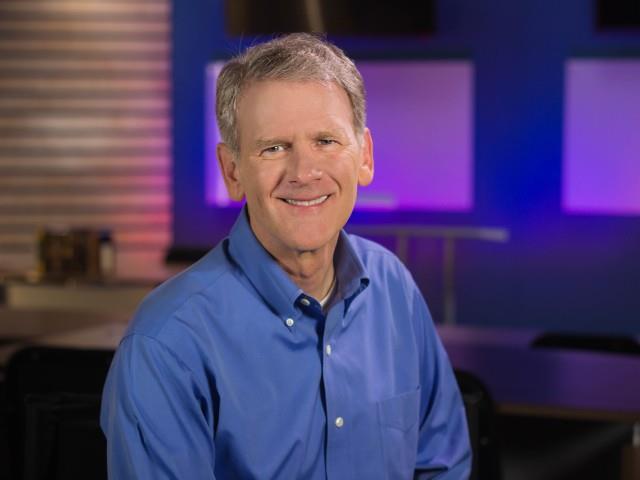
Pastor Bryan shares a lesson from Psalm 46. Dr. Chapell shares how God is our refuge and strength. This truth allows us to still know peace in a world were there is none.
Bryan Chapell: He is our refuge, and we turn to him recognizing how great is that power that he is promising to his people. But it is not just the power that surrounds us. It is not just the angels that are provided. Ultimately, he is our refuge and our strength.
Guest (Male): So glad you joined us for today's Unlimited Grace, the audio broadcast ministry of pastor and author Bryan Chapell. In today's episode, Pastor Bryan shares a lesson from Psalm 46. This Psalm highlights the promise of God to protect us. He is a mighty fortress, and even as the earth trembles, we can stand firm in the knowledge that God is our refuge and strength. You can find this lesson and many others when you visit unlimitedgrace.com. And while you're there, look for Pastor Bryan's book, The Promises of Grace. Dr. Chapell offers a careful look at the beauty of grace and all it brings to believers. These blessings come with the understanding that because we cannot hang on to God, he hangs on to us. Let's hear now from Dr. Bryan Chapell as he shares the lesson, The God Who Protects.
Bryan Chapell: You can imagine it. His wife's name shows on the caller ID on his cell phone. But when he answers the phone, it's not the wife; it's the four-year-old who has somehow figured out the keypad and the speed dial to daddy. And the four-year-old says, "Daddy, we've been in a wreck, and Mommy won't wake up." What does it mean, though the earth gives way and the mountains be cast into the midst of the sea, we will not fear? If you can take away the Hebrew poetry and a few centuries, what it means when you say the earth gives way is: Daddy, we had a wreck, and Mommy won't wake up. Or, "I'm sorry, the test came back positive, and it's stage four." The earth gives way means, "I don't love you anymore, and I've already packed my bags." The earth gives way means, "We don't need you anymore, and security is here to escort you to your car." Though the earth gives way—what does that mean? We get it. We actually know what that means. But what does it mean to say, though the earth gives way and the mountains be moved into the heart of the sea, though its waters roar and foam and the mountains tremble, we will not fear? How is that even possible? The purpose of this Psalm is to say not only is it possible, it is the promise of God that because he is a mighty fortress, not just against the evils and the trials of the world, but for the sake of our hearts, that even when material things give way, when the earth about us trembles and our feet shake, our hearts need not. That we can still know peace in a world where there is none because of a God who is our refuge and strength. Explaining what it means for a God to be a refuge and a river and to provide rest for our souls is this Psalm's purpose. The opening words many of us know well: God is our refuge and strength, a very present help in trouble. It's first just the promise that God provides protection. He is a refuge. For the Israelites, when they heard this Psalm, the referent that most of them will have in mind is a time in which the city of Jerusalem itself became that refuge, that fortress, the walls raised high on the high point that was Jerusalem to protect it from an enemy that was known as Assyria. What happened was this: Assyria had sent an army of 185,000 troops under King Sennacherib to attack Israel. The northern kingdom has already been decimated, wiped out. And now Sennacherib advances upon the southern kingdom and its capital, Jerusalem. Because the nation is not large, you know what is happening. The people of the southern kingdom have rushed into the fortress that is Jerusalem. The walls surround them. As they get into this high point of the fortress, surely they look to the north, and there they see the smoke of the cities that have already been ruined and ransacked. And they know that Sennacherib is coming with 185,000 to get them next. He actually sends a letter ahead of him. The letter, addressed to King Hezekiah, who's also in the fortress at Jerusalem, and the letter says, "If you surrender, I promise prosperity and peace. But if you don't, you die." Not only is the smoke rising from the northern cities, the refugees are already at the gate knocking and telling of the atrocities that Sennacherib has already visited upon them. Hezekiah, trembling with fears, takes the letter that has come from Sennacherib, and he goes to the temple of God, which has already been stripped of its gold and of its finery because they tried to pay a ransom to Sennacherib to beg him not to attack the city. It's already failed. He's coming with siege forces. And because he has no resources left, no means to protect himself left, all that King Hezekiah can do is take the letter of Sennacherib and put it on the altar of God and say, "God, we got nothing. You must be our refuge. You must protect us. We have nothing else. Save us, O God."
Guest (Male): You're listening to Unlimited Grace, the audio broadcast ministry of pastor and author Bryan Chapell. Have you thought about the fullness of God's grace and the role that it plays in your life? You can hear and understand that you are saved by grace, but what other spiritual benefits can an understanding of grace reveal? And what has God promised to believers that his grace will provide? In the book The Promises of Grace, Pastor Bryan offers a careful look at the beauty of grace and all it brings to you as a believer. God's word does not promise more money and fewer headaches, but his grace provides a confidence in our relationship with him. Pastor Bryan wants to help you focus on the promises that you can expect God to fulfill—promises of assurance of God's love, peace of conscience, joy in the Holy Spirit, and perseverance in trial. You can request your copy of The Promises of Grace when you go online at unlimitedgrace.com or by calling 844-41-GRACE. That's 844-414-7223. And now, more from Bryan Chapell on today's Unlimited Grace.
Bryan Chapell: His power is greater. Our God is great. He is our refuge, and we turn to him recognizing how great is that power that he is promising to his people. But it is not just the power that surrounds us. It is not just the angels that are provided. Ultimately, he is our refuge and our strength. The refuge is the fortress language of what is around us; the strength is what is within that God is also promising to provide. He will provide what is necessary for us. Verse four says, "There is a river whose streams make glad the city of God, the holy habitation of the Most High. God is in the midst of her; she (that is the city) shall not be moved. God will help her when morning dawns." Now again, we don't have the referent for that. But if you were in ancient Israel, you would know. What has happened? Sennacherib is coming with 185,000 to besiege the city. It will be easy to take Jerusalem. Here's the reason: even today, most great cities that we know are founded on bodies of water, right? Lake Michigan, Chicago. Mississippi River, St. Louis. London, the Thames. Paris, the Seine. Shanghai, Yangtze. It's just obvious. You need a water source by a great city. But not Jerusalem. Jerusalem is on a high point in a desert. How do they get water? Well, at the bottom of the hill, outside the city walls, there was a spring known as the spring of Gihon. And that's where they would go to get the water that was necessary for the sustenance of the city. But now Sennacherib is coming. How is he going to take the city? He doesn't even have to breach the walls. All he has to do is block their access to the spring, which is outside the walls. This will be easy. So Hezekiah recognizes what will happen. What does he do? He has his engineers go into a cave that's on the top of the hill in which the city sits, and he begins to drill straight down and then sends other engineers to the spring outside the walls and has them begin to dig over until a tunnel known as Hezekiah's Tunnel is built, connecting the spring to the city. You can still walk the tunnel with us if you want, if you go with us on the trip next spring. Now you would wish that there were a little bit better engineers, because when you're about in the middle of the tunnel where the two crews met, they were a little bit off. So there's a little zigzag there. They needed some of you engineers to help them out. But nonetheless, it worked. And you must recognize what that meant for the people as they hide the outside spring, camouflage it, put rocks and stones over it so Sennacherib can't get to it. And now they have water coming into the city. This is their security. This is their salvation. This is how they know they can survive. Despite the attack of what's around them, they will survive because of what is inside them. The spiritual significance will not really be known until 700 years later. For 700 years, the people continue to celebrate the salvation of God that has come by this spring coming up within the city. Now, because they have at the Feast of Tabernacles a week of celebration every year in which they celebrate God has tabernacled, he's made his home with us, he's brought his presence with us. He's Emmanuel, God with us. They have the Feast of Tabernacles, and every morning of the Feast of Tabernacles, they take water now from inside the city and they sprinkle the altar to say God has provided our salvation. God is the one who has provided. But when Jesus goes to celebrate the Feast of Tabernacles, he waits until the eighth day when no water is taken from the spring. The feast is over. And he instead says these words that will last forever: "If anyone thirsts, let him come to me and I will give him water. And this water will be a well welling up in him until eternal life." The ultimate promise was not the protection that was around from the forces, but rather the strength that would come welling up from within us by a union with the God of the universe. It was his provision. It was what was internal. It was what was spiritual that would provide the ultimate strength that God would provide for his people. It's that that is our confidence, that God is not just providing protection from the outside. Ultimately, recognize in a fallen and a cruel world, this world that is broken, that there are all kinds of things that will continue to attack God's people, but our ultimate support is what is within. Confidence that God will not abandon his purpose, nor will he abandon his people. But rather our faith with him will well up into confidence into eternal life and his preservation for our souls forever. It is the ultimate promise of strength. And it is what we claim when the trials are so hard and so bad. You have to think Martin Luther, when he wrote that great "A Mighty Fortress Is Our God" based upon the words of Psalm 46, he well knew how hard the world could be even when God was our refuge. Before he penned the words of "A Mighty Fortress Is Our God," he was already a fugitive, fleeing a church that was ready to kill him for claiming that we were saved by grace alone. Already his colleague, Leonard Kaiser, had been burned at the stake for holding to the same doctrine that Martin Luther was himself teaching. And now that you have read this Psalm, you have to think of how much it weighed upon Luther to be strengthened from the inside, not just from the outside, when he wrote: "And though this world with devils filled Should threaten to undo us, We will not fear, for God hath willed His truth to triumph through us. Let goods and kindred go, This mortal life also." What is the truth that will be maintained? But that Lord Sabaoth, the Lord of hosts, his name, is from age to age the same, and he must win the battle. Not because we survive, because his purposes survive. Not because our bodies survive, because our souls are maintained eternally by his great work. And we trust him because we say he is working a purpose greater than we can discern, but through people that he loves. And so we look for those marks in our lives where he is our refuge and our strength, and we claim it when we go through the battles yet again. Is it real? Does it mean anything for us today? We've been on vacation. One of the weeks we were out in Colorado, went to visit a son, baptize a grandchild. Wonderful time. But we also went because our youngest daughter Katie is staying with our son and his family in Colorado this summer. You may remember three weeks ago at the end of this service, I asked some of you to pray with me for our daughter Katie. She was in something of an emotional tailspin, had not gotten into the grad school that she wanted, went to spend some time with my son and his wife and their family in Colorado. The consequence was not only was she greatly disappointed about not getting into the grad school she wanted, she was now distant from her friends, from her support network, living in a new state. So you had to add to disappointment, isolation and loneliness. And for Kathy and me, we just saw our daughter just emotionally lower than we have known her to be. And we were worried. And so I said at the end of this service, "Would some of you just come pray for me? I'm not sure how to help my daughter. Pray for my daughter." And Mike Jackson was the first to come up here and put his arm around me, and others of you gathered and we prayed, and others prayed for other things. Now, I saw Katie. Kathy and I took a little trip with her while we were out in Colorado. And as we were talking, we were dealing with a different daughter. She was back to her old self. She was ebullient and happy and joyful and fun like she usually is. We said, "What happened?" She said, "Well, last week (which would now be three weeks ago), I went to a new church because I was told they had young people my age. And I went, and there was nobody my age." She said, "I was frustrated and disappointed, and I was walking out the door, and somebody tapped me on the shoulder and said, 'Do you like to camp?'" And she said, "Yes." And they said, "Well, all our young people are out camping this weekend, but they'll be back tonight and you could go to their meeting." And Katie said, "I went to the meeting. I've got all kinds of people who love what I love and they love the Lord." She said, "Mom and Dad, it just changed so fast." Now, we had to do a little bit of the thinking back. So I'm up here, and Mike has his arm around my shoulder, and we're praying for my daughter. And right at that moment, somebody's tapping my daughter on the shoulder in Colorado and saying, "Do you like camping?" And I think of the words of scripture: "While you are yet asking, I will answer," says the Lord. And so here we are praying, and the Lord is answering in a different place. Does it always happen that way? Of course not. But we have in our lives these Ebenezer stones, these rocks of remembrance that we say, "All right, I'm going through a hard time now, but consider the deeds of the Lord."
Guest (Male): That's Pastor Bryan Chapell, and you've been listening to Unlimited Grace. If you've been blessed by this message and would like to hear more from Dr. Chapell, I would encourage you to visit unlimitedgrace.com. In addition to messages from Pastor Bryan, you can explore the many sermons, podcasts, seminars, and more available to you. Also, be sure to request a copy of the book from Dr. Bryan Chapell called The Promises of Grace. We'll send you a copy right away as our way of saying thank you for your most generous financial support. Once again, go to unlimitedgrace.com, or you can give by calling 844-41-GRACE. That's 844-414-7223. Please be sure to join us next time as, once again, we endeavor to put Christ at the center of our efforts so that lives might be transformed by his unlimited grace. This ministry is brought to you by Unlimited Grace Media and continues to be made possible with your generous financial support.
Related Episodes
The God Who Fathers - Part 2
Tuesday, July 28
The God Who Fathers - Part 1
Monday, July 27
The God Who is Better - Part 2
Friday, July 24
About Unlimited Grace
Unlimited Grace is dedicated to spreading the gospel of God’s grace to all people. We desire for believers everywhere to serve God through faith in His grace that frees from sin and fuels the joy of transformed lives.About Bryan Chapell
Bryan Chapell, Ph.D. is the Stated Clerk Pro Tempore of the Presbyterian Church in America (PCA), based in Lawrenceville, GA.
Dr. Chapell is an internationally renowned preacher, teacher, and speaker, and the author of many books, including Each for the Other, Holiness by Grace, Praying Backwards, The Gospel According to Daniel, The Hardest Sermons You’ll Ever Have to Preach, and Christ-Centered Preaching, a preaching textbook now in multiple editions and many languages that has established him as one of this generation’s foremost teachers of homiletics.
Dr. Chapell is passionate about sharing the truth of God's grace with others, because it provides the freedom and fuel for transformed lives of joy and peace.
He and his wife, Kathy, have four adult children, a growing number of grandchildren, and lives rich with friends, fishing and faith.
Contact Unlimited Grace with Bryan Chapell


